



GnRH Receptor
Gonadotropin releasing hormone receptor; GNRHR
The GnRH receptor (Gonadotropin-releasing hormone receptor, GNRHR) is a member of the rhodopsin-like G protein-coupled receptor (GPCR) family and consists of seven transmembrane helical domains connected via extra- and intra-cellular segments. GnRH receptor is located on the plasma membrane of gonadotrophs, pituitary cells that synthesize the gonadotrophins LH and FSH.
Mammalian type I and II GnRH receptors show differential ligand preference for GnRH-I (also named as LHRHR) and GnRH-II, respectively. All GnRH receptors activate the Gq/11 family of G proteins, which activate phospholipase C-catalyzed production of second messengers that activate protein kinase C (PKC). GnRH receptor activated by GnRH analogues stimulates the synthesis and release of LH and FSH. GnRH receptors can be used for the research of breast and prostate cancer, regulation of fertility, endometriosis and a range of other medical and veterinary uses.
All Product Categories
-
GnRH Receptor Related Products (161)
Related Products (161)

-
Antibodies (3)
-
Linzagolix
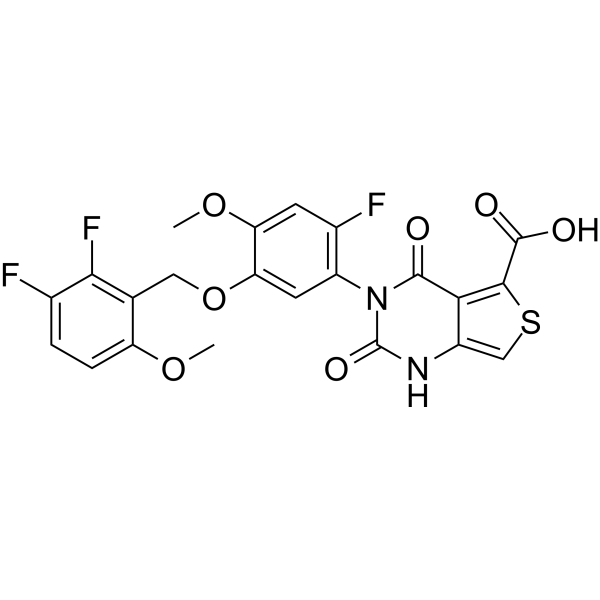 0 ImagesSynonyms: KLH-2109; OBE-2109Linzagolix (KLH-2109; OBE-2109) is a potent, non-peptide, and orally active GnRH antagonist. Linzagolix can be used for uterine fibroids, endometriosis, adenomyosis research.
-
(R)-BAY-899
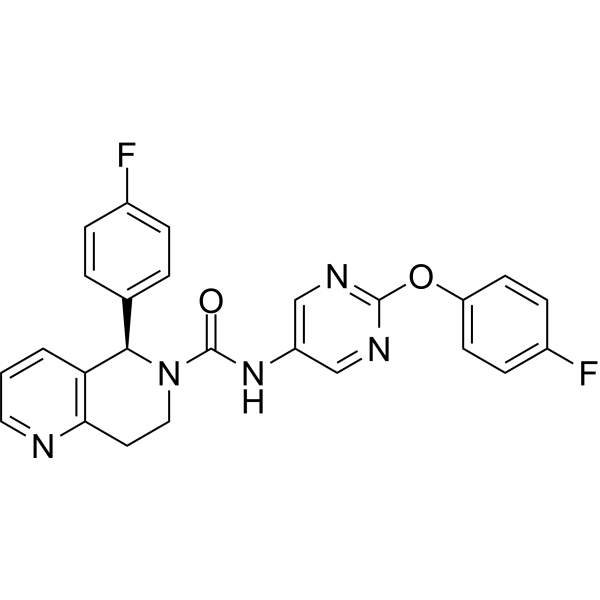 0 Images(R)-BAY-899 is the R-enantiomer of BAY-899. BAY-899 is an orally active and selective luteinizing hormone receptor (LH-R) antagonist with IC50s of 185 nM and 46nM for hLH (human LH) and rLH (rat LH), respectively.
-
Ganirelix acetate
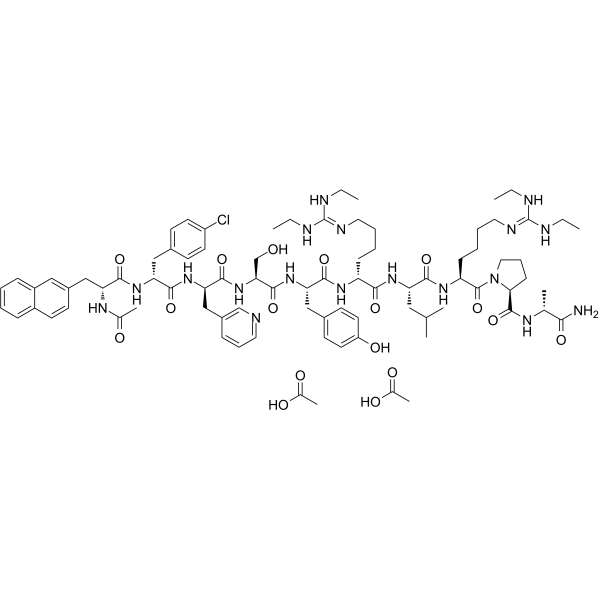 0 ImagesSynonyms: GanirestGanirelix acetate (Ganirest) is a competitive and selective gonadotropin-releasing hormone (GnRH) antagonist. Ganirelix acetate blocks endogenous GnRH-induced release of luteinizing hormone (LH) and follicle-stimulating hormone. Ganirelix acetate antagonizes Prostaglandin E2 (HY-101952)-induced detrusor overactivity and enhances Carbachol (HY-B1208)-induced detrusor contraction. Ganirelix acetate is applicable to research related to female infertility and detrusor overactivity.
-
Zebrafish Kisspeptin-1
 0 ImagesCat. No.: HY-P10419CAS No.: 1071873-79-4Zebrafish Kisspeptin-1 is the core sequence of the neuropeptide kisspeptin-1, which participate in the regulation of gonadotropin-releasing hormone (GnRH) release, and regulates the reproductive system.
-
Lumigolix
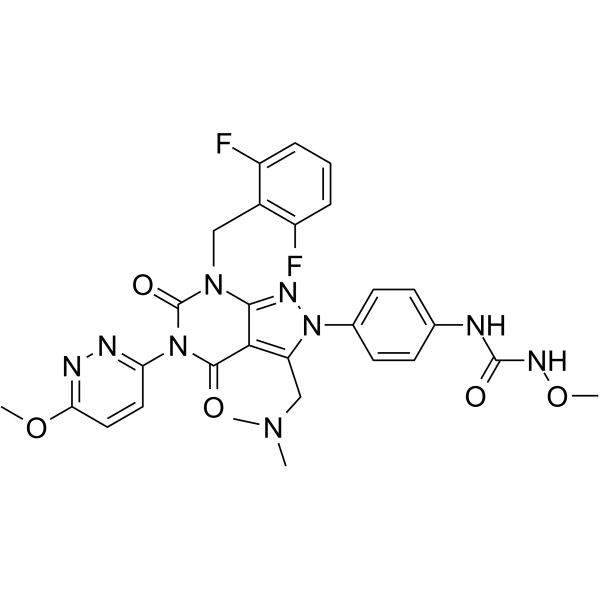 0 ImagesSynonyms: GnRH antagonist 2Lumigolix (GnRH antagonist 2) (formula I) is a GnRH receptor antagonist that can be used for endometriosis research.
-
Zoptarelin doxorubicin
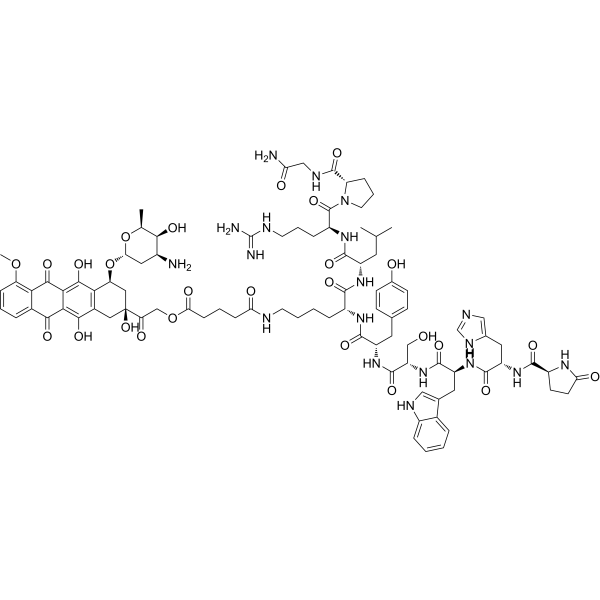 0 ImagesCat. No.: HY-16532CAS No.: 139570-93-7Synonyms: AEZS-108; AN-152Zoptarelin doxorubicin (AEZS-108; AN-152) is a hybrid anticancer agent, containing Zoptarelin and Doxorubicin. Zoptarelin doxorubicin has been used to research targeting tumors expressing LHRH receptors. Zoptarelin doxorubicin abolishes tumor progression and induces remarkable apoptosis in vitro.
-
EA-230
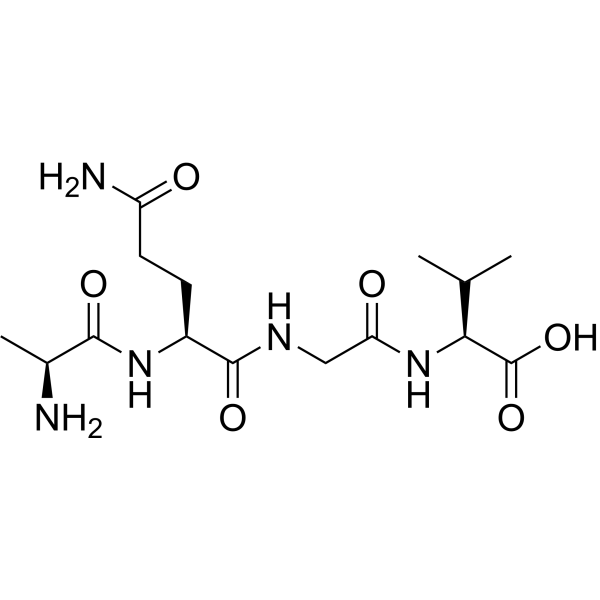 0 ImagesEA-230 is a synthetic oligopeptide originally derived from beta-human chorionic gonadotropin (beta-hCG) lysates. EA-230 has anti-inflammatory effects and can be used for the research of sepsis.
-
(D-Trp6)-LHRH free acid
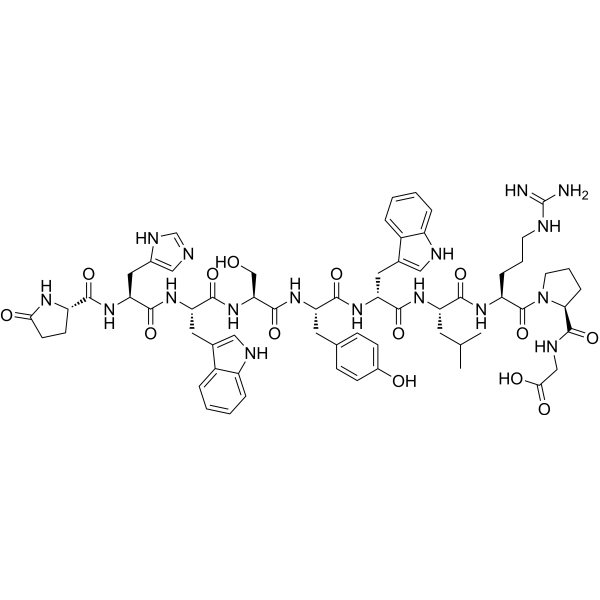 0 Images(D-Trp6)-LHRH free acid is a luteinizing hormone-releasing hormone (LHRH) agonist.
-
[D-Lys6]-LH-RH
![[D-Lys6]-LH-RH](https://file.medchemexpress.com/product_pic/hy-p3668.gif "Click to View [D-Lys6]-LH-RH Product Detail") 0 Images[D-Lys6]-LH-RH is a Luteinizing-hormone-releasing hormone (LHRH) analogue. [D-Lys6]-LH-RH acts as a GnRH receptor agonist.
0 Images[D-Lys6]-LH-RH is a Luteinizing-hormone-releasing hormone (LHRH) analogue. [D-Lys6]-LH-RH acts as a GnRH receptor agonist.
-
[Gln8]-C517 (LH-RH), chicken
![[Gln8]-C517 (LH-RH), chicken](https://file.medchemexpress.com/product_pic/hy-p1905.gif "Click to View [Gln8]-C517 (LH-RH), chicken Product Detail") 0 Images[Gln8]-C517 (LH-RH), chicken is an avian hypothalamic peptide, which stimulates release of gonadotropins from anterior pituitary, thus regulating reproductive functions.
0 Images[Gln8]-C517 (LH-RH), chicken is an avian hypothalamic peptide, which stimulates release of gonadotropins from anterior pituitary, thus regulating reproductive functions.
-
N-Methyl-DL-aspartic acid
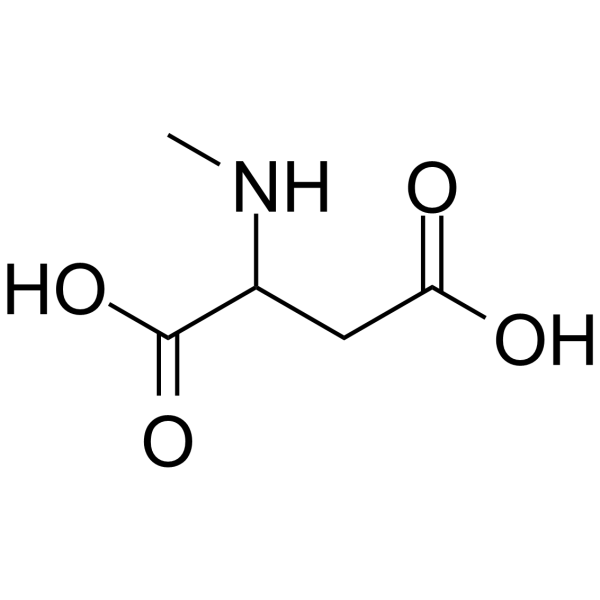 0 ImagesN-Methyl-DL-aspartic acid acts as an agonist for N-methyl-D-aspartic acid receptors and D-isomer-specific aspartate receptors. N-Methyl-DL-aspartic acid activates hypothalamic neurons that regulate gonadotropin-releasing hormone secretion, and stimulates prepubertal male rhesus monkeys to produce sustained intermittent gonadotropin-releasing hormone secretion and pulsatile luteinizing hormone secretion. N-Methyl-DL-aspartic acid activates excitatory effects mediated by N-methyl-D-aspartic acid receptors. N-Methyl-DL-aspartic acid exhibits convulsant effects, inducing clonic convulsions with loss of righting reflex, generalized tonic-clonic seizures or persistent clonic seizures. N-Methyl-DL-aspartic acid causes precocious puberty. N-Methyl-DL-aspartic acid can be used in studies related to convulsions and seizures.
-
Prolactin Releasing Peptide (1-31), human acetate
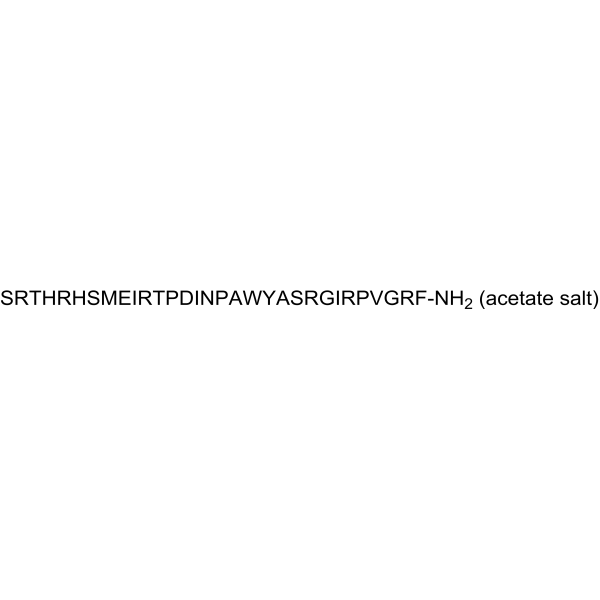 0 ImagesCat. No.: HY-P1520APurity: 98.32%Prolactin Releasing Peptide (1-31), human (acetate) is a high affinity GPR10 ligand that causes the release of the prolactin. Prolactin Releasing Peptide (1-31) binds to GPR10 for human and rats with Ki values of 1.03 nM and 0.33 nM, respectively. Prolactin Releasing Peptide (1-31) can be used for the research of the hypothalamo-pituitary axis.

-
BAY 1214784
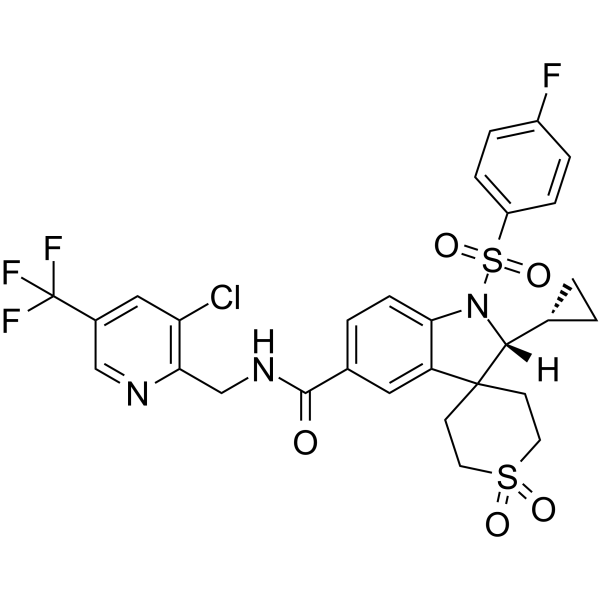 0 ImagesBAY 1214784 is a potent, selective, and orally active antagonist of the human gonadotropin-releasing hormone receptor (hGnRH-R). BAY 1214784 is a spiroindoline derivative compound. BAY 1214784 effectively lowers plasma luteinizing hormone levels by up to 49%, at the same time being associated with low pharmacokinetic variability and good tolerability. BAY 1214784 has the potential for the research of uterine fibroids.
-
[D-Lys6]-LH-RH TFA
![[D-Lys6]-LH-RH TFA](https://file.medchemexpress.com/product_pic/hy-p3668a.gif "Click to View [D-Lys6]-LH-RH TFA Product Detail") 0 ImagesCat. No.: HY-P3668A[D-Lys6]-LH-RH TFA is a Luteinizing-hormone-releasing hormone (LHRH) analogue. [D-Lys6]-LH-RH TFA acts as a GnRH receptor agonist.
0 ImagesCat. No.: HY-P3668A[D-Lys6]-LH-RH TFA is a Luteinizing-hormone-releasing hormone (LHRH) analogue. [D-Lys6]-LH-RH TFA acts as a GnRH receptor agonist.
-
Kisspeptin-54(human) TFA
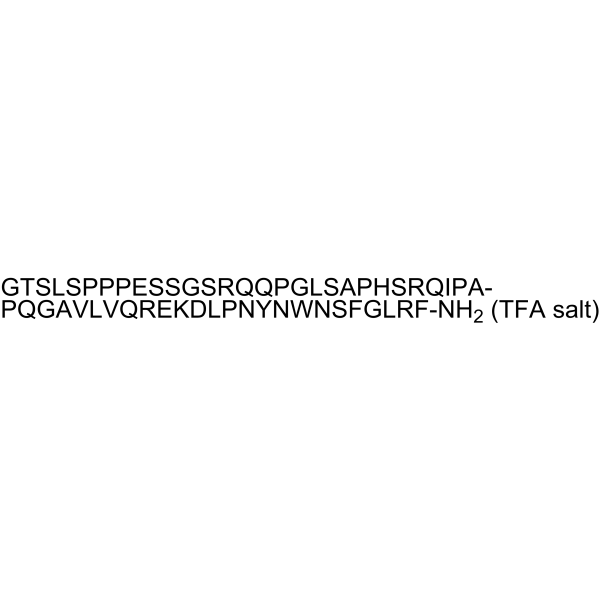 0 ImagesCat. No.: HY-P1022APurity: 98.86%Synonyms: Metastin(human) TFAKisspeptin-54(human) TFA (Metastin(human) TFA) is an endogenous ligand for kisspeptin receptor (KISS1, GPR54). Kisspeptin-54(human) TFA binds to rat and human GPR54 receptors with Ki values of 1.81 nM and 1.45 nM, respectively. Kisspeptin-54(human) TFA hinders tumor metastasis and stimulates gonadotropin secretion.
-
LGnRH-III, lamprey
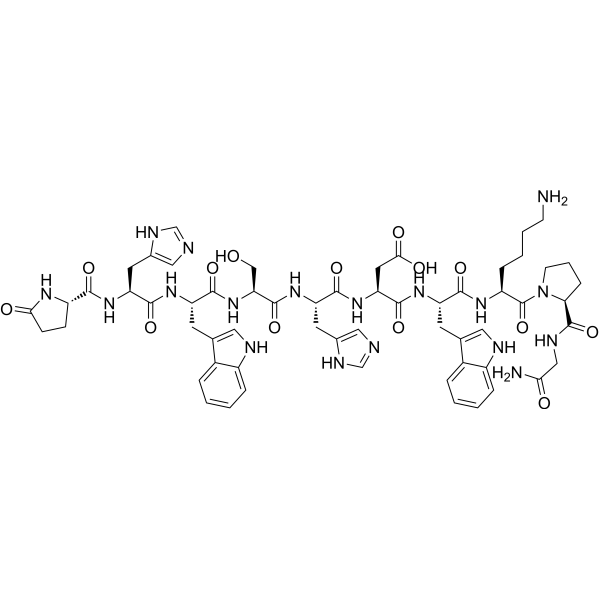 0 ImagesLGnRH-III, lamprey, an isoform of GnRH isolated from the sea lamprey, is a weak GnRH agonist with antitumor activities.
-
NBI-42902
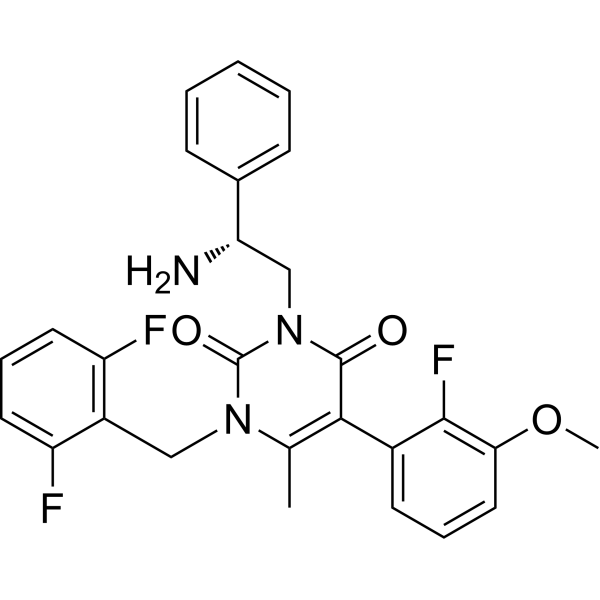 0 ImagesNBI-42902 is an orally active, potent functional and competitive antagonist of GnRH receptor with an IC50 value of 0.79 nM, a Ki value of 0.56 nM, respectively. NBI-42902 inhibits GnRH-stimulated inositol phosphate (IP) accumulation, Ca2+ flux, and ERK1/2 activation. NBI-42902 inhibits serum luteinizing hormone (LH) in castrated male macaques. NBI-42902 can be used for research on sex-hormone-related diseases.




